


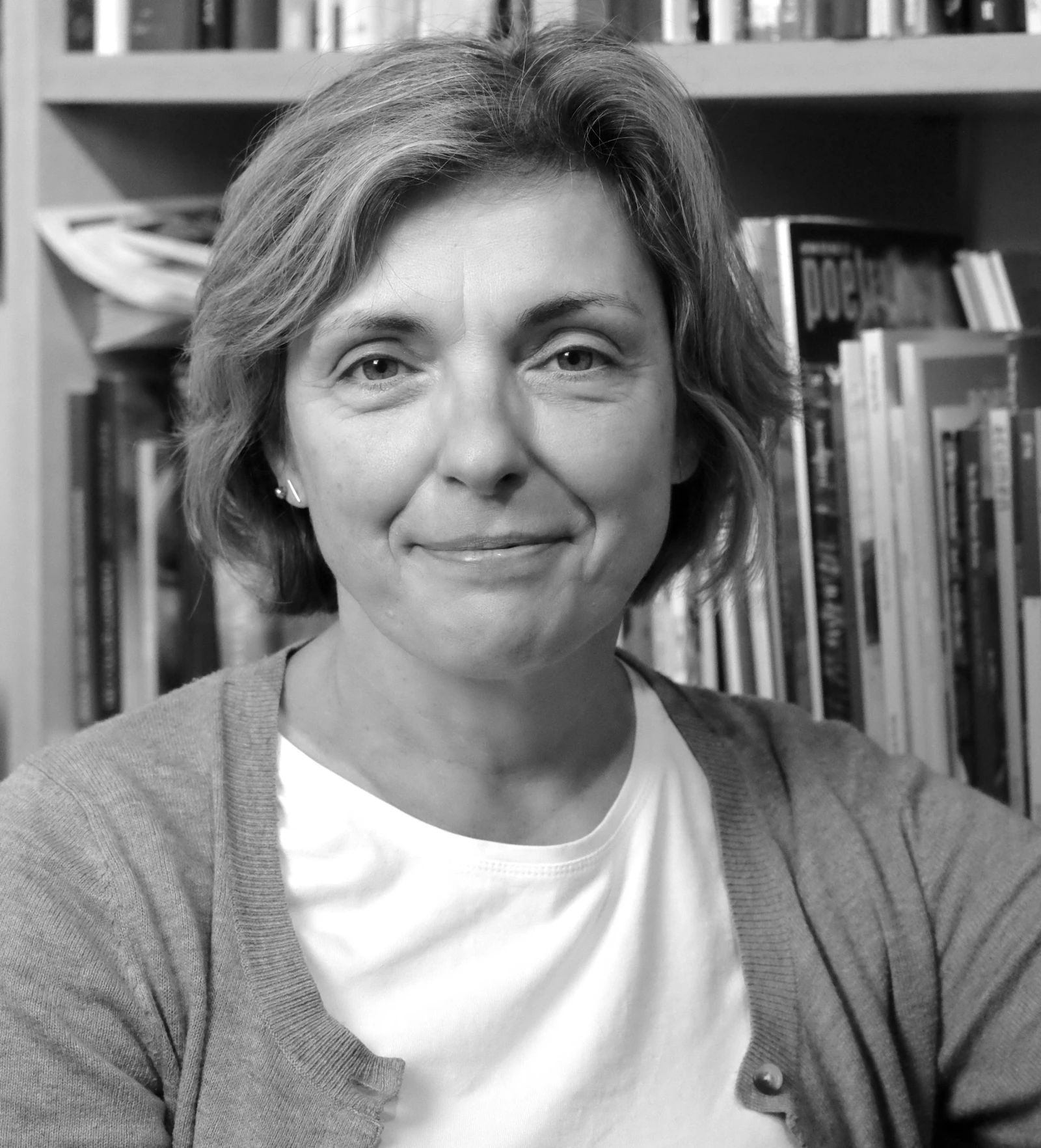
On the occasion of the paperback edition of her novel Bed Table Door and Words, In Other Places Literary Festival organised by the Irish Writers Centre and the Seamus Heaney Centre, Queen’s Belfast, April 2026
Interviewed by Hilary Morgan Ventura
HMV:
First, I thought we could begin by talking about the seeds of the book. It's about young people who feel ostracised by the society they were born into, helpless at the hands of political regimes that shun humanistic ways of life. Without spoilers, I’d say this estrangement, coupled with the ways violence and injustice underpinned so many different relationships and institutions in Hungary, leads to a journey of complete transformation for Sofie, the main protagonist. Are elements of the book autofictional? Were you interested in writing a story that provided commentary on socialism, communism, and democracy, or did this happen naturally?
CT:
Certainly, the first part of the novel, “Bed”, is semi-autobiographical, based on my own experiences as a young person growing up under the socialist regime. I was born in 1963, but by the time I was a teenager, Hungary was known for “Goulash Communism” under the leadership of János Kádár, who took over in 1956 after betraying the uprising and bringing in the Russian army. Although we were under surveillance, people lived relatively well and, under certain conditions, were allowed to travel to the West, so we were not only fed with socialist propaganda, but also with symbols of freedom smuggled in, such as blue jeans and pop music. We knew that life was much better on the other side of the Iron Curtain, and that freedom of speech was respected.
When writing the novel, I was old enough to know that these were just slogans, and that freedom as such was a fickle issue in the West; racism and capitalist exploitation were facts, and what you finally find when seeking freedom can only be realised on a personal level. For me, in art; but for Samu in the novel, it means coming out as a gay man. So, these layers slowly appeared in the novel as irony, in hindsight, realising the double edge of the notion of freedom.
HMV:
Second, I was fascinated by the role or use of dreams. On multiple occasions, you describe in vivid detail Sofie’s or Samu's dreams, among several others. This fleshes out the interiority of these characters, but I also suspect there were other intentions behind these dream accounts and references to premonition. Could you talk a bit about this?
CT:
When creating Sofie’s character, as we said, I was drawing from myself, looking at my teenage self, full of dreams and some psychic experiences. When Samu and Sofie have the same dream while camping, that scene is based on personal experience. I found it amazing that two people can be so deeply intertwined in body and soul that they share the same dream. I don’t think this happens very often, but C. G. Jung also talks about “the big dream” that we can have — something that becomes reality in the future. My mother had such a dream a year before her first husband died, as a warning that she, of course, did not take seriously at the age of 29; but it happened, and the death of her first husband made my life possible — strange but true, sad, but also life-affirming.
HMV:
Next, the stylistic choices you made in writing the book — did you set out to write short chapters, or did this happen naturally? Whenever I’m working on a manuscript or even an essay, I naturally think about pace. Did you want the book to move quickly?
CT:
Agents and editors have commented on my novels, saying that they are somewhere between the commercial and the literary, meaning that there is a plot that can speed up the pace, while the approach is literary and often deeply psychological. This is why many readers have said that they could not put it down. Perhaps the emotional intensity and fast pace are based on my latent ADHD, or my obsessive nature that often comes to the surface. I am not sure why this is. I was born very quickly, I know that, and I started my writing career as a scriptwriter. So, I rely on the reader’s imagination to conjure the imagery.
In Bed Table Door, the story is told through two different points of view, and although critics like Martin Doyle have remarked that this is Sofie’s story, I wanted to be fair to both characters and explore their development in detail. So, switching required shorter chapters that are often woven into each other. I played around with this deep connection between Sofie and Samu, switching from one mind to the other, sometimes through dreams. Less happens in the first part, when we are in “the lukewarm water” and the grey existence of socialist Hungary, but the minute they leave, the action speeds up in the West. I think, all in all, this is based on personal experience, too.

Csilla Toldy has published three volumes of poetry with Lapwing Belfast (2013, 2015, 2018), a first full collection, Firebird, with Arlen House (2025); Angel Fur and Other Stories with Stupor Mundi (2019); and the novel Bed Table Door (Wrecking Ball, 2023), which won the Desmond Elliott Prize. www.csillatoldy.co.uk
Read more of her work here: https://humag.co/author/csilla-toldy

Morgan L. Ventura is a Belfast-based poet, writer, and translator. Her poetry and prose appear in Poetry Ireland Review, Southword, The Magazine of Fantasy and Science Fiction, Banshee, The Waxed Lemon, and Al Jazeera, among others. She is the author of the micro-pamphlet some minor, sometimes divine, existential crises (Ghost City Press, 2024) and is currently working on a hybrid memoir with support from the Arts Council of Northern Ireland.
More work by Morgan L. Ventura



Tel: 028 7126 6946
Email: hueditor@theverbal.co
Verbal, Stable Lane and Mall Wall, Bishop Street Within, Derry/Londonderry, BT48 6PU
 company
Copyright © 2026 Honest Ulsterman