

A Brief History

In 1962, when the British critic Philip Hobsbaum came to Belfast to teach at Queen’s University, there were no formal creative writing groups in the city. Hobsbaum had been an undergraduate at Cambridge when, in 1953, he advertised in Varsity seeking members of a verse-speaking group. He invited anyone to join, and three young men came to the first meeting. One of them was the future poet Peter Redgrove, who remembered his anxiety that first night:
The door was opened by a chap with spectacles, very smartly dressed in a beautiful suit, carrying a cane for elegance. He said, ‘Have you come about the poetry reading?’ I said, ‘Yes, but I’m afraid I’m only a scientist. I shan’t be much good at this, but I am interested. He said, ‘A scientist!’ That’s just what we need, just what we need.’ And that characterised his whole dealings with things. He was so open. There were no two cultures for him—it was a single culture. And it was real. All the poems dealt with were real.
Thereafter the “Cambridge Group” expanded, and eventually members started reading their own poems to each other. Hobsbaum typed up the poems and circulated them before each meeting so that members had a chance to read each other’s work before the discussion. He would use the same method in his future writing groups in London, Belfast, and Glasgow.
Hobsbaum left Cambridge for London, where he started another writing group—known simply as “The Group”—that famously included Ted Hughes, Peter Porter, and the Canadian poet David Wevill. (Sylvia Plath applied for admission but Hobsbaum told me he turned her down—a decision he later regretted.) Hobsbaum was a disciple of the Cambridge critic F. R. Leavis, with whom he had studied. Leavis believed in separating the author’s work and life, and Hobsbaum applied this approach to his Group sessions: the poem’s author had to remain silent while others discussed his (or, less frequently, her) work. Peter Porter remembered Hobsbaum saying, “We are not here to hear from you in prose explanation what you meant. We are here to see what we can find in your writing, to show what you meant.” It was, Redgrove recalled, an “atmosphere of great interest. There wasn’t a dull moment.”
Hobsbaum’s London Group favored the wilder romanticism of Ted Hughes to the poised lines of Movement poets such as Kingsley Amis, John Wain, and others. When I interviewed Hobsbaum in 2000, he told me of his own antipathy towards the Movement, which he said other London Group members shared:
We were all very adverse. We felt the Movement, in terms of poetry, was too circumscribed, too formalistic. . . . poetry in Britain, in the early fifties, was at a very low ebb. People were trying to write like T. S. Eliot, and they didn’t have any sort of background … trying to write like Rimbaud, and they couldn’t read French.
Many Group poems from this period were eventually published in 1963’s A Group Anthology, co-edited by Hobsbaum and Edward Lucie-Smith.
Hobsbaum moved to Sheffield in 1959, where he worked toward a PhD at the university there under William Empson. Three years later he arrived in Belfast to take up a lectureship in the English department at Queen’s. He immediately began searching for literary talent, and invited his colleague Edna Longley and his graduate student Stewart Parker to join a new writing group. Hobsbaum, who was Jewish, claimed that he paid little attention to sectarian divisions in the city in the early sixties. “I was told by more than one person that Catholics and Protestants would never meet under one roof—for any purpose. The Belfast Group, among its other achievements, proved these well-wishers wrong.”
Seamus Heaney read A Group Anthology when it appeared in 1963. By this time, he had published two poems in the Belfast Telegraph, and had discovered Ted Hughes’s Lupercal in the Belfast Public Library in November 1962. Heaney reviewed A Group Anthology in Hibernia, seconding Hobsbaum’s hope that more writing workshops would proliferate “up and down the country and the universities.” Heaney wrote, “One can only hope his suggestion is taken up. If there was a Group in Belfast, Dublin, Cork and Galway, our young poets would find it easier to meet an audience and above all, interest should increase. Which might not be a bad thing.”
The first Belfast Group workshop took place in October 1963 in Hobsbaum’s flat at 5 Fitzwilliam Street. Membership was based on literary potential, and Hobsbaum’s gut feeling. He had been impressed by an early poem of Heaney’s in Q, the Queen’s University literary magazine, and had extended an invitation to his new writing group by post. Shortly thereafter, Heaney, “smiling and keen,” turned up at his door. “He seemed incredibly pleased to be noticed, taken up and spoken to,” Hobsbaum remembered.
Hobsbaum’s Belfast Group met for eight eight-week terms from October 1963 to March 1966. Each Tuesday (later Mondays) about ten people read and discussed the featured writer with “Leavisite rigour,” as Michael Longley later said. After a coffee break, Hobsbaum opened up the floor to other writers who wished to read their own work. The group broke up around midnight. The founding members included Hobsbaum’s wife Hannah, Seamus and Marie Heaney, Stewart Parker, Edna Longley, Joan Newmann, and others; Michael Longley, Bernard MacLaverty, Norman Dugdale, and Michael Allen were among the later members under Hobsbaum’s chairmanship. Derek Mahon, who was living abroad in the early sixties, went once. Paul Muldoon and Ciaran Carson joined a second iteration of the Belfast Group after Hobsbaum left the city for a new post in Glasgow.
Hobsbaum ran the Belfast Group much like his other groups in London and Cambridge. Edna Longley remembered, “It was very intimidating, run like a seminar in an autocratic way, which created a sense of occasion—and a sense of controversy.” The Belfast Group was particularly important for Heaney, whose work Hobsbaum favoured. Ted Hughes was an important link between Heaney and Hobsbaum, and helps explain why Hobsbaum preferred Heaney’s work to Longley’s. Heaney had been deeply influenced by Hughes’s Lupercal, and Hobsbaum had championed Hughes’s poetry in Cambridge and London. Hobsbaum sensed and admired the early Hughesian notes he found in Heaney’s poetry.
Michael Longley, who attended at his wife’s Edna’s suggestion, was more sceptical of Hobsbaum’s poetic biases. One Group member, Jack Pakenham, felt that “Honest-to-God Ulster down-to-earthness was encouraged, poetic flights of extravagant vision and imagination were frowned on as ‘Pretentious.’ . . . . week after week there was a proliferation of poems that a naturalist or folklorist would have loved . . . . a bird-watching botanist with a Classical education and a mad uncle who loved stoats would have been the ultimate hero in the ultimate poem in this climate.” Heaney remembered that Hobsbaum thought Longley and Mahon’s work was “too elegant. He was a strong believer in the bleeding hunk of experience. So there was an edginess therefore and I was favoured and they weren’t.”
But Longley too gained much from the workshop, even though he was “taken aback” by Hobsbaum’s hostility toward some of his poems. He recalled the “electric” atmosphere, and the knots in his stomach as his poems were discussed. It was here that Longley began his long friendship with the Heaneys, who were his first close Catholic friends. Longley, who called himself a “reluctant joiner,” recalled their first meeting at a party at Hobsbaum’s flat: “Heaney held my elbow very tightly: ‘Are you the Michael Longley who wrote ‘Questionnaire for Walter Mitty’ and ‘Emily Dickinson’? I was flattered and charmed and our friendship got under way there and then.” The Longleys were also the Heaneys’ first close Protestant friends. The two couples grew friendly in the early sixties. Heaney gave Longley a record of First World War songs, O What a Lovely War, which, Longley said, “awakened filial emotions that had gone underground.” (Longley’s father had fought in the First World War.) “Thanks to that interchange with the Heaneys I wrote ‘In Memoriam’. . . . There were many such reciprocities.” Longley introduced Heaney to Mahon—Longley and Mahon had become close friends at Trinity—and Heaney introduced Longley to Simmons. Heaney, Longley, and Mahon began to meet on their own and give readings together in Belfast in the mid-1960s.
The Belfast Group, and Hobsbaum himself, boosted member poets’ morale at a time when Belfast was still regarded as a provincial backwater. Mahon later remarked, “Here was this man from London, people thought, whose name and whose friends’ names appeared in the leading journals, and he’s actually taking us seriously.” Heaney too felt that Hobsbaum was a living link to a world that seemed beyond reach for young poets just starting out in Belfast. “He had been to Cambridge and had published Ted Hughes in Delta. He knew the poet-editors in London. He gossiped about Redgrove and Porter. He included us in, encouraged us to try publishing further afield.” Hobsbaum was an outsider, which mattered in Belfast’s segregated society. His Jewishness gave him an air of neutrality in a group that attracted both Catholic and Protestant poets accustomed to guarding their words. Many Belfast Group poets appreciated the freedom of expression they felt under his roof. Heaney and Longley felt comfortable enough to write poems exploring their cultural identities: at Group meetings Heaney presented early drafts of “Requiem for the Croppies” and “Orange Drums, Tyrone 1966.” Longley presented “The Hebrides,” which explored the islands as a way station between England and Ireland, and “Birthmarks,” dedicated to Mahon. Many of these “Groupsheets,” on which the poems were circulated, are now held at Emory University’s archive in Atlanta, Georgia.
In 1964, Hobsbaum famously introduced Heaney to his friend (and co-editor of A Group Anthology) Edward Lucie-Smith at a dinner party. Lucie-Smith, who was well-connected in London, showed three of Heaney’s poems to Karl Miller, the literary editor of the New Statesman, who accepted them for publication. The poems got the attention of Charles Monteith, an editor at Faber and Faber, who invited Heaney to send him a manuscript in January 1965. “I just couldn’t believe it, it was like getting a letter from God the Father,” Heaney said. In 1964 and 1965, the BBC aired two programmes about poetry in Belfast that helped put the city on the modern literary map. Longley said, “A convection current seemed to be lifting us upwards. We wanted to get better and better.”
In 1966 Hobsbaum left Belfast for a new position at the University of Glasgow, where he started another creative writing group. In Belfast, the Heaneys kept up the Group meetings at their home on Ashley Avenue and at the Four in Hand pub on the Lisburn Road. New members included Paul Muldoon and Ciaran Carson; James Simmons went on to found The Honest Ulsterman in 1968, the same year that Heaney, Longley and David Hammond embarked on a successful reading tour called “Room to Rhyme.” The trio performed at schools, parish halls, and pubs across Northern Ireland. Heaney remembered feeling “empowered” by the tour itself: “The fact that I felt free to read a poem about the 1798 rebels to a rather staid audience of middle-class unionists was one such small symptom of a new tolerance.”
But those feelings of freedom and tolerance were short-lived. In 1969, the People’s Democracy New Year’s March from Belfast to Derry erupted in violence and ushered in a new era of fear. The Battle of the Bogside, Loyalist bombings, and Terence O’Neill’s resignation followed. Britain deployed troops in Northern Ireland in August 1969, and in 1970 Westminster introduced internment without trial. Longley was caught off-guard, saying in 1970, “as a middle-class Protestant I’d always thought this sort of thing could never happen, and here it was—it had happened.” In a 1994 article for the Sunday Tribune, Heaney invoked the Room to Rhyme tour as an example of what Northern poets might have achieved had a quarter-century of violence not stalled their efforts.
The Belfast Group disbanded in 1972 when Heaney left for Wicklow in the wake of the Bloody Sunday shootings. Belfast’s reputation in the 1970s became synonymous with violence rather than poetry. And yet, in the decade between Hobsbaum’s arrival and Heaney’s departure, the city had produced fine poets who commanded an international audience. In a Belfast Group retrospective published in The Honest Ulsterman in 1976, nearly every person interviewed remembered the Group positively. Longley was grateful for the way Hobsbaum had “committed himself to Belfast and the writers here with great energy and generosity.” For Heaney, the Group was “one of the most active, sociable and satisfying I have experienced.” Perhaps Mahon put it best when he said that Hobsbaum’s “enthusiasm generated activity in people who might otherwise have fallen silent.”
Heather Clark is the author of The Ulster Renaissance: Poetry in Belfast, 1962-1972, which won two book prizes from the American Conference for Irish Studies; Red Comet: The Short Life and Blazing Art of Sylvia Plath, which won the Slightly Foxed Prize for Best First Biography and was a finalist for the 2021 Pulitzer Prize in Biography; The Grief of Influence: Sylvia Plath and Ted Hughes, an American Library Association Outstanding Academic Title; and, forthcoming from Knopf, Her Kind: The Boston Years of Sylvia Plath, Anne Sexton, Adrienne Rich and Maxine Kumin. She is Professor of Contemporary Poetry at the University of Huddersfield.
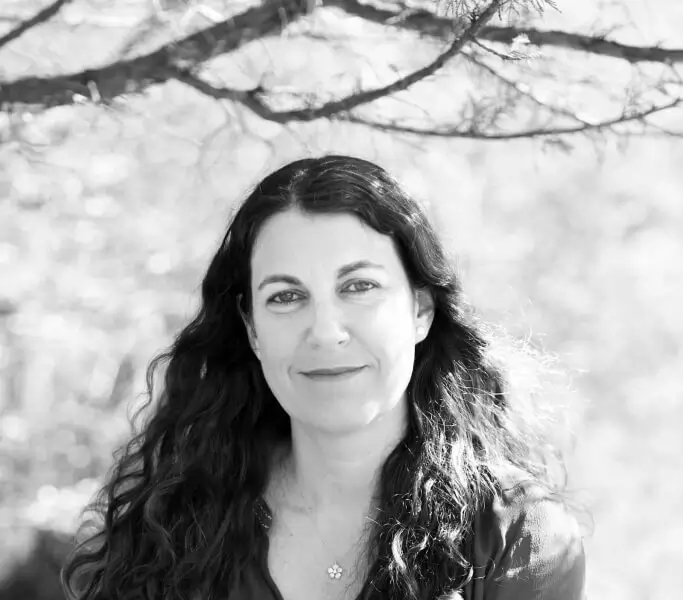
Heather Clark is the author of The Ulster Renaissance: Poetry in Belfast, 1962-1972, which won two book prizes from the American Conference for Irish Studies; Red Comet: The Short Life and Blazing Art of Sylvia Plath, which won the Slightly Foxed Prize for Best First Biography and was a finalist for the 2021 Pulitzer Prize in Biography; The Grief of Influence: Sylvia Plath and Ted Hughes, an American Library Association Outstanding Academic Title; and, forthcoming from Knopf, Her Kind: The Boston Years of Sylvia Plath, Anne Sexton, Adrienne Rich and Maxine Kumin. She is Professor of Contemporary Poetry at the University of Huddersfield.
More work by Heather Clark


Tel: 028 7126 6946
Email: hueditor@theverbal.co
Verbal, Stable Lane and Mall Wall, Bishop Street Within, Derry/Londonderry, BT48 6PU
 company
Copyright © 2026 Honest Ulsterman