


She sat into his taxi. War had blown him like a magpie over her coast and into her town. She scanned the ocean. His smile in the rear-view mirror, ‘in my country, no sea. Only desert.’ His eyes swung back to the road’s sinuous body around the hills.
She tried, ‘I think I’d like to drive a cab, like you.’
Confusion flickered, ‘I am a cab?’
She explained, ‘I’d like to drive a taxi.’
His silence said women were mere shadows in his country.
She leaned, ‘you could go to college here.’ It would give him a purchase on the ice of this strange society.
He spoke to the steering wheel, ‘college is expensive here.’
His village of baked earth below an untamed sky. ‘At least you won’t have many night shifts here. Just the clubs, at the weekend,’ she said.
He seemed to gather courage before he asked how long she had lived in the town.
She leaned again, ‘always. Just me and my mother now. I’m looking for work. I want to travel.’ Her father had driven a taxi once until death sat into his second-hand Opel and demanded he take it home, free of charge. Known for his parsimony, at his funeral she overheard, ‘hope the hearse hasn’t a meter.’
He slowed for a sheep on the road. She wanted him to elaborate, make a metaphor about how they came for him after dark. Or in the glare of sunlight, a worse dark.
'This is the place,’ she said. They both saw the house on the hillside. Her friend stood at the door, above the ocean.
‘What’s your name?’
‘Hassan.’
He refused her tip.
They met sometimes and talked through the invisible razor wire history and distance threw between them, and sometimes too she felt the faceless figures of her own past watching her.
She left the town seven months later and moved eastwards. Sunflowers shone like headlights. Sunlight doused her. Insects branded her. Lured by hot winds into a city strafed by war, she hailed another taxi among the rubble. After a short distance, a sniper’s bullet found the driver. He pointed to the meter, then died. She ran, found an open door and a husband and wife on the fourth marble floor of the almost deserted apartments.
‘Leave his body,’ the husband said from experience.
His wife raised her eyebrows at the blood stained face of Boy George on the visitor’s T-shirt. Sipping the mint tea they offered, she said, ‘I hadn’t thought the city to be so dangerous.’
The wife laughed, ‘my darling, this little town has been in shit for years. War is our natural state.’
Collected at her hotel, she had used American dollars to persuade the driver to drive her through the art of destruction – its charged stares, its fruit stalls like miraculous flowers in the dust. Again, from the rear seat she coaxed and pacified him. The driver told her how his children had learned the dialect of war and even feared the ennui of peace.
Twice the driver wanted to stop, to turn away, until she injected him with more money. Through the open window she could smell the sea, or thought she could. The bullet kissed the driver’s head deeply, and a watermelon of blood exploded onto his shoulders. The windscreen turned to frost, then collapsed.
‘Even death is a scavenger here,’ the husband said now, smiling.
His wife offered her segments of watermelon. Juice anointed her fingers as she ate.
‘We miss the sound of kids around this part of town,’ the wife said.
Yes, she had seen it, an agitated spirit of their absence stalking the empty roads under ghostly lamps of sun.
‘Still many taxis,’ the husband added, ‘but less than at the start of the war. The latest war, that is.’
‘What should I do about the driver?’ she asked them. She knew they must see through the shallowness of this charade, the hollowness of her gesture.
‘Like I said, leave the body.’
'Someone might call by for it later,’ the wife echoed him, ‘but the pockets will be rifled.’
‘Nobody wants to join the poor bastard of a driver,’ the husband reminded her.
Flies would have their ritual. Heat would play with the corpse’s gases and its odours corrode the air.
The wife brought humus and sticks of celery and said, ‘the souls of the dead need to be quick off the mark around here.’
‘Off to the taxi rank in the sky,’ the husband smiled.
She had led a man to his death.
‘Probably easier to hire a cab in heaven than around here,’ the wife said.
‘Cheaper too,’ her spouse added.
She sipped mint tea.
‘Safer to eat inside, the balcony makes us sitting ducks,’ the wife said, above a platter of salad. ‘A sniper got one of our friends with a chunk of red snapper still in his mouth. It was terrible.’
They discussed war: its dynamics, its contours, how it annealed their lives.
She had seen date palms howl in a white-hot wind. War was impervious to climate. ‘I wonder if the driver was married or had children?’ her fragile voice said.
The husband continued to chew but his wife spoke, ‘more than likely he did. The single guys are either involved in combat or have cleared out. It’ll be tough but you know,’ and she spooned honey onto her pitta, ‘kids around here learn to cope, in their own way.’
A young Hassan would have stood before these infernos of hatred.
‘But still, you didn’t have any,’ she said. She felt the bullet of her indiscretion.
The couple stared at her.
‘That’s a private matter,’ the husband said, quietly.
Her hands clasped her face like a bloody cloth, ‘I’m sorry. I’m truly sorry.’
The wife reached out to her, ‘we had to spare them. We did that at least.’
A rumble drifted through the afternoon’s syrup of heat.
‘Are you married?’
‘Let’s just say we left them in a better place,’ the husband said.
‘In your balls,’ the wife laughed.
She chatted to the couple and wiped her eyes. How fear grew from the same soil as the vine. Black grape shade of the night sky and the scent of incense in the groves, ravines and the avenues of evening discourse – all, all infected.
‘It was brave of you not to have kids,’ she said.
They nodded.
‘It was difficult, believe me, very difficult, especially for my wife.’
‘I’m sure I won’t have any either,’ she said and managed a smile.
‘Do you have a boyfriend?’ the wife asked.
‘Yes, he’s actually from the middle east. Hassan,’ she said, comforted by her lie.
After dark, a neighbour called to say the taxi and its contents had been burned.
‘Contents?’ she said to the couple.
‘That’s the way it is here,’ the wife said nonchalantly.
‘I think we should at least toast him. That’s not a pun,’ the husband said.’
All three raised their glasses.
'It’s a superb Shiraz,’ she said.
‘To this shitty life,’ the husband said, ‘and all who sail in her.’
'I feel like a shit’ she said to her hosts and drained her glass.
‘Why?’ the wife asked.
But she ripped open the kitchen door and was running down the corridor. Heat splashed around and on the street, smoke drove its hooks into her nostrils. Children broke from the blazing wreck at the sight of her and she shouted something from her childhood. The cab’s smouldering altar dripped decay.
'Taxi?’ a child asked her.
She waited for a bullet. She wanted a bullet. But most of all she wanted a taxi. A black skeleton lay behind in buckled and tyre-less wreck.
Sorry, she said to the skeleton.
The couple helped her back up the stairs.
'Quelle betise,’ the husband said. He handed her a damp cloth. His wife brought a fresh cotton linen dress, ‘I don’t want it back, you learn not to hoard around here.’
She returned home in December but found Hassan had left the taxi company. She found a taxi to drive. You’re like Bobby De fucking Niro, her senile mother said.
Snow thickened on the windscreen. She never left the engine running to power the cab’s heater and instead, wrapped a heavy alpaca blanket around her body, tucked her feet under her buttocks on the driver’s seat between fares. She tried to avoid the taxi rank’s innuendo.
Her sister warned her that she could be raped. ‘Small towns breed the best weirdos.’
She smiled, ‘at least I’ll be dealing with experts,’ she said but her sister did not laugh.
‘Ever see Hassan, that driver you knew? I thought we might see a wedding,’ her sister’s voice offering oblique pleasure.
She shook her head, ‘he found a steadier job in security.’
Two nights later, she was groped in the taxi by a local pharmacist’s son.
‘I want security,’ she demanded of her employer.
‘You’ll have it,’ he promised.
A terrier named Bruno appeared in her cab, ‘named after a famous boxer,’ the manager said. The canine presence in the cab relieved her loneliness and some of her fear. He can be a vicious little bastard, the manager said. Fumes of decay from the animal’s breath filled the cab.
The couple wrote to her of how the wilderness of war had come to their door. Wolves approached, even in daylight, their faces hidden but their eyes ravenous with atavism. We hold each other all the time, the wife said. Let them tear us apart but we’ll find each other again, over some poxy rainbow.
She wrote back on a postcard of an abbey deep in woodland: ‘we all drive away from evil. Desperately, eyes fixed ahead, we thunder through the days’ darkness. We try to get beyond the uproar to the peace of fields and rivers. We’re all cab drivers. Take good care of yourselves.’ She felt it was sanctimonious bullshit but posted it.
Bruno bit a passenger for no discernible reason and was exterminated. The manager presented her with his ashes and an identical animal, ‘Bruno’s son,’ he said. Bruno’s son was called Nero.
A local journalist wrote an article about her, her singular courage as a woman amid the wolf-pack of taxis, her intimate memories of cab drivers from the lamp lit streets of cities and her devotion to the taxi as ‘an arena of wondrous encounter.’
Nero followed in his daddy’s footsteps and drew blood from a drunken teenager. She buried Nero’s ashes in her garden. I’ve run out of hounds, the manager said. In her new loneliness she sank herself into the night, deeper into the ferrous odours of damp clothing and fuel and deep-fried food and alcohol and vomit. Sunshine of April came gently. Death from tractors, juggernauts and joyriders hung around at intersections but respected her as a local.
Love hailed her twice in less than ten months, but she turned it away by demanding a fare. Decrepitude came to her cab and it creaked and wept tears of oil. Then its gearbox suffered a cardiac.
Some nights, she sat outside Hassan’s place of work but sighted him only once, walking with another man through the dusk. She imagined herself mounted behind him on a camel, then a magic carpet of love, then a moped.
You’ve buried two dogs and a car, you have me robbed, the manager said, and gave her another used cab.
‘Sometimes I wonder about her,’ he said.
‘Me too,’ another driver said, ‘and I won’t tell you what I wonder.’
The manager claimed he was not amused. But he was both amused and deeply roused.
New drivers swarmed into the ranks, some too old but driven by hunger and boredom, others, young hooters wired to the myth of dashboards. Some would finish as part of the dashboard. She held her ground.
The taxi’s interior became her sanctuary, its dashboard an altar lit by electric candles. Never be unfaithful with a ‘civilian’ car, she advised a colleague.
Two lovers came to her like swallows. She recognised the daughter of a factory supervisor and the adulterer as a bored gents outfitter. Older, the retailer burned day and night in the flames of his transgression. She felt his heat on her neck as she drove. The girl was a supple stalk of flesh who relished her role as siren and loved the taxi driver as a fellow conspirator.
‘Mums the word now, okay?’ the retailer said from the rear seat.
‘I just want my customers to be happy,’ she assured the adulterer.
She watched the meter’s digital blinks as the retailer shed his guilt and his money burned in the heat of slobber on the rear seat. The girl wanted her to drive the old road, ‘for the bumpy ride,’ she said, giggling; it was a road close to the great bedroom window of the lake.
‘Don’t worry about the expense,’ the retailer’s voice said from a thick serum of lust.
Sometimes loneliness rode on the cab’s roof, its claws hooked into any grip they found. One Sunday, she saw Hassan walk through mist at dawn, and she pressed the horn and drew alongside.
‘You should get back to the taxis,’ she said. His eyes full of animal innocence and his skin’s seasoned dark leather.
‘Maybe.’ He nodded, wanted to speak some intimacy, before shyness whipped him on.
Her hands clung to the anchor of the steering wheel, otherwise she would have fallen away into a chasm.
Age grew on her like dew. You’re thirty-two years old now, she said to her face reflected in the rear-view mirror. But what have I done, she asked, only chased that effulgence I know to be hidden in the windscreen’s rain blurred depths.
‘We’re slowing down?’ the factory manager’s daughter said and straddled her lover.
Her foot reacted on the accelerator, ‘sorry, not trying to rip you off,’ she said. The meter showed her the high price of their lust. Stars echoed sparks of mica in the hills. She opened the window wider to release the couple’s odour.
‘I envy you guys,’ she said without turning her head. She felt she had broken protocol. But did not care. Ranks of dark trees flowed past.
‘So many roads travelled,’ the retailer said.
‘And so many not travelled,’ the driver said.
The girl looked at her through the city lights of the dashboard, ‘I’ve taken a few wrong turnings too, so you’re not alone.’
The cab driver stroked the steering wheel, ‘I don’t drive, really. I’m driven.’
‘Forget the fare. Tonight was on me,’ the driver said.
They tried to insist. But she held firmly to her madness.
That night, she slept in the cab and woke stiff from her dreams on the rear seat but pleased too with the intimacy of surfaces and the presence of the machine in her darkness. Her sanctuary. River water spread its fumes through the open window, and the cab was a globule of sunlight. Numerals glowed crimson in the meter and she reached forward to cancel her meaningless debt and stepped onto the empty pavement. She threw the ignition keys over the parapet of the bridge but did not hear the splash.
Naked without the cab, she was now one of the millions who walked on the hard surface of the day’s birth. Some early traffic passed and melted into the streets’ silence. The retailer and his lover would be asleep on the shore of a beautiful catastrophe. Hassan would be walking home and not thinking about her.
She hailed the next cab.
‘You’re new?’ she said and his tongue struggled over the slippery rocks of the language. She was surprised she had not seen him earlier. A furious wind has blown you here too, she thought, like Hassan. No buzzards wheeling here, son. No smoke blue light in gorges. Just this oncoming milk tanker’s klaxon like a death knell over the town.
He stopped on the edge of the town to use a filling station’s toilet, and embarrassment broke the strings of his voice, ‘too many chips,’ he said, tapping his stomach. She told him to take all the time he needed. Sliding doors swallowed him.
He would learn the circuitous route for the unwary fare, the fudged meter reading, the slowed pace and all the other drivers' secrets. She glanced around the forecourt, then sat into the driver’s seat and drove away in his cab as a voice on his radio talked about food poisoning. Once on the motorway, she could take any road she chose. But knew she would never reverse. Because this trip would cost more than money. She switched off the meter.
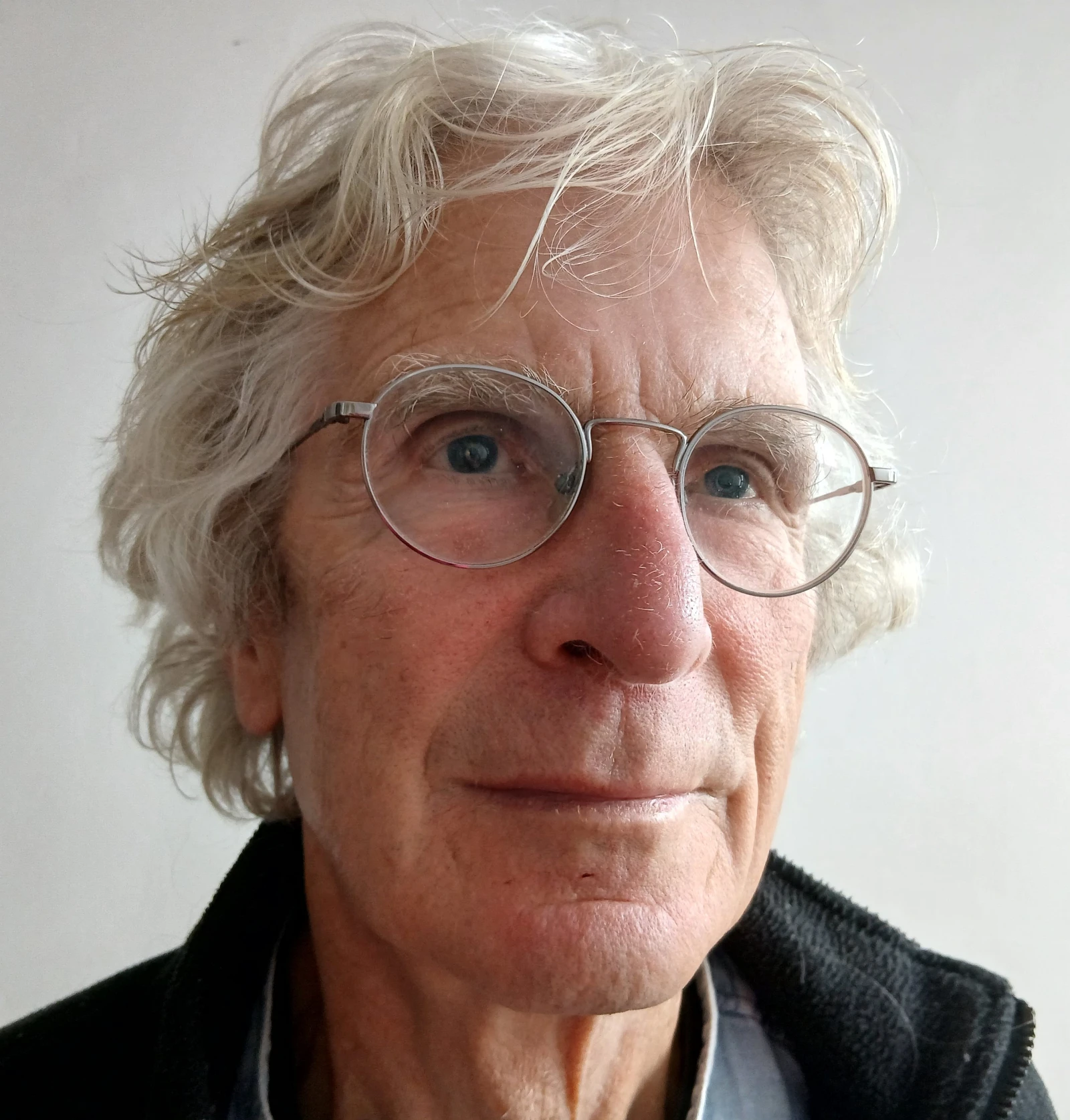
John was born in Sligo and lives in Dun Laoghaire. His work has appeared in The Stinging Fly, Stand, Poetry Ireland Review, Acumen, Force 10, Black Mountain Review and elsewhere. Shortlisted for the Hennessy Award. He is currently preparing a collection of stories.
More work by John Siberry



Tel: 028 7126 6946
Email: hueditor@theverbal.co
Verbal, Stable Lane and Mall Wall, Bishop Street Within, Derry/Londonderry, BT48 6PU
 company
Copyright © 2026 Honest Ulsterman