

Rosemary Jenkinson
Coronavirus is shaping a new society. Utopists, envisioning how individual kindnesses can expand into state kindness, have already begun dreaming of better worlds.
It’s been a strange time for our all-consuming, late-capitalist, upgrading society. Shopping has transformed from a source of insta-gratification into a hazardous task. At the beginning of lockdown, I went to the Mace. The radio was on loud and a local presenter was haranguing listeners with, ‘You have no reason to be out. It isn’t safe for you. Go home right now!’ He seemed to be talking to me directly like I was in the midst of The War of the Worlds, so I paid for my goods in a rush and exited. It certainly brought a new meaning to panic-buying.
These days, even a simple walk is complicated and when I swerve round passers-by, risking life and limb by stepping onto the road, I smile ruefully to let them know it’s nothing personal and I don’t really think they’re pox-ridden, plague-pickled, pest-infested freaks, but the truth is I have been scared. Lockdown really has brought home that old adage; two’s company, three’s a crowd.
After Boris Johnson’s refusal to raise nurses’ pay it’s ironic in the extreme that he ended up weak and prone in their hands. I wouldn’t be surprised if a few vengeful images went through those nurses’ heads of tampering with his oxygen supply. There were reports at the time of hospitals running out of oxygen, but what the hell, crack open the laughing gas and let’s all die laughing.
On the optimistic side, there have been some encouraging changes to society – alcohol makers switched to making hand-sanitiser and Mercedes, instead of inanely flying round an F1 track guzzling petrol, switched to producing life-saving oxygen equipment. Thanks to less cars on the road, the nitrogen dioxide levels have also gone down. Perhaps due to this, our lives will all be prolonged by a month or two - that is if we’re lucky enough to dodge the coronavirus bullet - but it looks as though the downturn in pollution will be brief. As restrictions ease, no one wants to risk public transport, so car use will rise more than ever. We’d all have private jets if we could.
I try to limit the news feeds as there’s more handwringing going on in the world than handwashing, but one thing was clear; flights should have been stopped from China, then Italy, at the first sign of infection. At the time, however, the British government believed that singling out these countries would seem racist. It’s fantastic that thousands of people have died simply because of governmental fear of the racism card – hurrah for libertarian ideology! And as for the government’s initial support of herd immunity policy, keeping business up and running at the expense of our lives, it’s reminiscent of British devotion to free trade during the Irish famine which contributed to a million deaths.
The shortage of PPE provided to healthcare staff has been horrifying. My own neighbour delivers medical supplies to the coronavirus wards in the Royal without a mask, wearing a pair of gloves so small they split on him. When he voiced his concerns, his boss said, ‘Just pray you don’t get it.’ I hardly think divine intervention counts as a substitute for safety standards. It’s absurd that care workers can have a shiny new badge bearing the imaginative ‘CARE’ logo when they can’t even lay their hands on a visor.
One good outcome of coronavirus is that celebrities have proven beyond all doubt they have nothing to contribute in times of strife. They’re not even allowed to turn up at the hospital for a photo op and thank God you’re spared the likes of Ed Sheeran serenading you during your final hours. The new celebrities are the singing and accordion-playing junior doctors and nurses who inject a bit of life into proceedings in more ways than one.
At the beginning of March, one of the earliest cases of coronavirus in Belfast was a postgraduate returning from North Italy. Queen’s University claimed they had undertaken ‘appropriate cleaning’ but my friend who works there revealed that days later there were still coffee rings on the postgrad’s desk. All that deep-cleaning we hear of is probably a quick scoot round with a feather duster.
Not everyone understands the risks. My eighty-year-old neighbour came round and handed me a ‘Support Our NHS’ poster to put in my window. I said thank you but rushed to stick it in my decontamination chamber and shoved my hands in a fumigation bath of hydrogen peroxide – just part of our normal daily routine now. I can only hope my neighbour with all his free time does some YouTube course in magic arts and levitates any posters through my window in future.
The hand gel I currently use was left over from my trip to the Himalayan Echoes Festival in India last October and I can almost laugh at my paranoia back then about catching dyptheria or dysentery. Now I have something to really wash my hands for. I’ve sung happy birthday to myself so many times I feel like I’m six hundred years old!
Will Covid-19 change how we work? Many journalists are predicting a brave new world where more workers stay at home and work remotely, but the loneliness would drive us insane. I’ve even turned into my own office bully, constantly badgering myself to write.
One apparent change is that entrepreneurs are beginning to thrive on the black market. During total lockdown I found an ad on my door from a local barber offering to visit my home. Social distancing and haircuts, of course, are incompatible unless the hairdresser can operate robot arms from a laptop, but funnily enough I have noticed the Sinead O’Connor headshave is back in style for younger women, although you need DMs to pull it off. I call it the coronacut.
Coronavirus has also had a positive impact in highlighting the value of working women and their bravery as nurses and doctors. But it was fitting that the last literary event I attended in March was the book launch of Her Other Language which raised the issue of domestic abuse at a time when some women were about to endure lockdown horrors trapped inside with their men.
It’s a relief to see lockdown law slowly lifted. In April, I needed to order heating oil, only to be told that companies no longer did through-house delivery because of social distancing. After phoning around for hours, finally a company came round with a small tank on a rickety trailer which looked about as old-fashioned as a rag-and-bone man on a cart. Welcome to twenty-first century progress!
If the pandemic has demonstrated one thing it’s that the UK is not the only state with a Brexit spirit. Every individual country in Europe has imposed its own quarantine laws and sealed its own borders. There is no pan-Europeanism when it comes to disease and it’s every nation for itself.
So, what of future utopian ideals? The UK is one of the most populous countries in Europe and the government mania for building ever more social housing flats in our urban areas has exacerbated the spread of infection by forcing the poor into closer proximity than ever before. We need urgent depopulation. Expansion is not the way forward for progress, but reduction. The obsession with international conglomerates has failed and outsourcing to other countries for PPE has been disastrous, proving that we need to be more local than global and more self-sustaining. As we adapt to our ‘new abnormal’, we truly need radical political ideas to reflect these times.
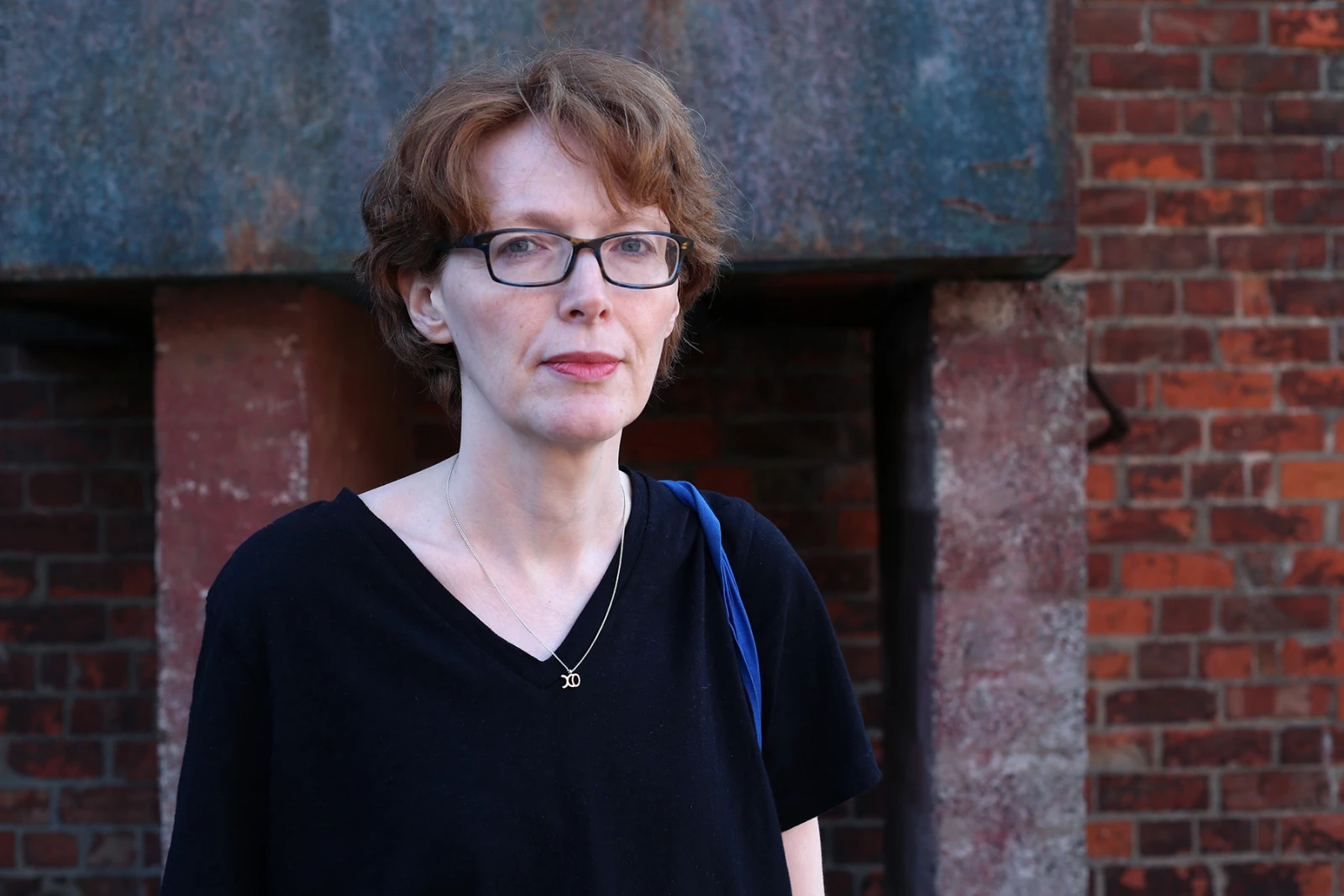
Rosemary Jenkinson is a fiction writer, playwright, essayist and poet. She’s had over twenty plays produced and performed in Belfast, Dublin, Edinburgh, Brussels, Melbourne, New York and Washington DC. Her new poetry collection, Let Freedom Fall Upon You, will be launched by Arlen House at the BIAF in October 2026.
More work by Rosemary Jenkinson

Tel: 028 7126 6946
Email: hueditor@theverbal.co
Verbal, Stable Lane and Mall Wall, Bishop Street Within, Derry/Londonderry, BT48 6PU
 company
Copyright © 2026 Honest Ulsterman