

An Interview
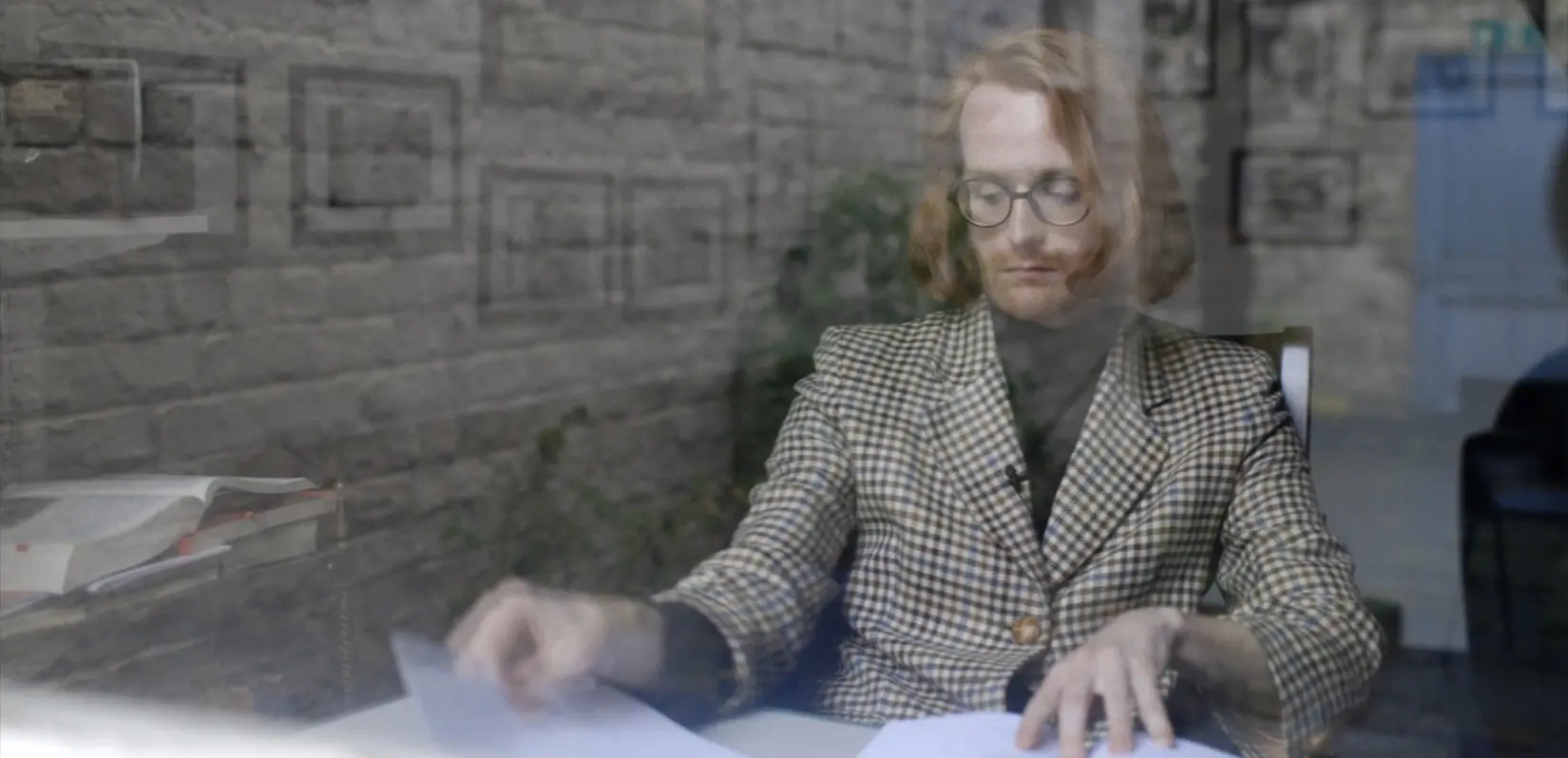
Padraig Regan’s debut poetry collection, Some Integrity, received the 2021 Clarissa Luard Prize and was published with Carcanet in January 2022. They spoke to Susanna Galbraith about the collection and how it came together.
Susanna Galbraith: So how did Some Integrity start?
Padraig Regan: That’s kind of tricky because it’s hard to tell where and when exactly the book began. A lot of work that I did in the early stages actually ended up not in the book itself. I guess I date the start of the book to 2016, though I didn’t write a huge amount between 2016 and 2019 because I was doing my PhD during that time, which was taking me quite far away from the lyric mode. But I think June 26th - which is mentioned in the essay in the middle of the book - is where the book started, conceptually at least, although the actual writing started a little bit later.
Around 2019, after I’d handed in my PhD, I found myself writing lyric poems again and I noticed that there were certain images or ideas that kept occurring in the poems: bodies in various states of collapse or falling apart or disintegrating in some way, and a kind of virtuality or fakery or things not being as they appear to be. And that’s where the title came from. I started thinking about this word ‘integrity’, about its two meanings: integrity as a physical property that an object can have, its material stability or cohesiveness, and integrity as moral or ethical principle, a kind of honesty.
SG: Yes, the first thing I wanted to ask you about was that title ‘Some Integrity’. I wonder if I could draw you out a little bit more on that, because I think the word ‘some’ is a very interesting component as well…
PR: To some extent the phrase entered my head when I was thinking about if and when I was going to write a book: I always said I wasn’t going to put any of the work that was published in either of my pamphlets into a first collection, because I wanted to write a first collection that had some integrity of its own, that was a distinct project. And then I started thinking about the phrase, about the word ‘integrity’... I think it needs the ‘some’, to be undermined in some way. Because the book isn’t really about integrity, it’s about a lack thereof.
SG: I want to start by asking about food, because it’s such a huge presence in the book. I read your blog entry for the Carcanet website where you mentioned that your interest in food is related to an interest in still lifes. Could you talk a little about that…
PR: The interest in still lifes goes right back to when I started taking writing seriously. At that time I was interested in Dutch still lives, and the problem that’s raised in that brilliant Simon Schama book The Embarrassment of Riches about 17th Century Baroque Dutch painting: why is it that a protestant culture – based on protestant ideals of austerity and visual simplicity and moderation of the appetite – created these incredible images of material abundance? So that’s where the interest began, and I think it is still there, an interest in how food and images of food always encode an idea of economics — in a very general sense: economics as any system based on consumption.
But over time my interest in food changed. I became much more interested in writing about food as a way of thinking about the body, and about how eating is this everyday, habitual act that confronts us with the actual material reality of our bodies. I’m interested generally in ideas of abjection, that state in which something is not quite other and not quite the self. In very physical terms food animates that: the matter that gets taken into the self and becomes part of the self and then not part of the self again.
SG: You have that wonderful line in the poem ‘Risotto’: ‘I eat it & I think about the moment that it will become / not it but I. & not without regret.’ There’s always this question mark, this play between empathy and objectification, self and other. The idea of ‘meat’ is something that comes up a lot…
PR: Eating is always an act of violence. We are always eating other bodies; they may be plant bodies or animal bodies. Another thing I’m interested in doing in some of the poems is – and this may be a technique I do a little too often – is imputing a kind of consciousness an object that does not possess it.
SG: You explore this liminal area between the animate self and inanimate objects, and I suppose that tension gets concentrated in that great poem about watching a GIF of tentacles that start to move again when soy sauce is poured on them, ‘Katsu Ika Odori-Don’…
PR: I was just reading Freud’s book on the uncanny, and that dish doesn’t map exactly onto Freud’s definition, but does onto that earlier theory of the uncanny from Jentsch that Freud is trying to expand. Jentsch suggests (or at least Freud says that Jentsch suggests) that the uncanny arises when we are in a state of confusion about whether an object is animate or not. And that dish is so obviously related to this, because it is dead but it is moving as if it is alive. There’s also a lot of sublimated sexuality in that poem as well.
SG: There’s something that happens sometimes in the work that looks at human bodies, usually via artworks or drawings, where it’s almost like the mechanics of knowledge become embodied – knees are ‘facts’ for example, or elbows ‘questions’ – and that’s just one element of a negotiation with the idea of embodiment, isn’t it?
PR: Yeah, I think that’s what the whole book is about, questions of embodiment. I’m particularly interested in what Mikhail Bakhtin would refer to as the ‘grotesque’ body: the body that overflows its limits, the body that has holes in it, the body that takes things in, gives things out. That is actually a much truer description than the notion of body as a closed system, an individual object over which consciousness has dominion. And it’s also a way of talking about queerness and queer embodiment. Queerness is always a rearrangement of the body, or of its sites of penetration or contact with the world. I guess it’s always on my mind how Judith Butler talks about how the distribution of gendered pronouns is only ever possible in relation to a particular arrangement of penetrator and penetrated.
SG: Let’s talk about this idea of queerness. I’m going to quote you back at yourself (sorry, but it’s a good a way into this as any)... again in that Carcanet blog entry you say ‘Queerness may well be this book’s animating principle, but I have no particular desire to write about queer subject matter, or tell queer stories. What motivates me is the question of how to write queerly. This is, for me, a project that necessitates a reconsideration of writing’s assumptions’. I wonder if you could talk some more about that…
PR: I’m deeply suspicious of any poetics of disclosure, particularly at a time such as ours, which is a time of surveillance capitalism. The construction or expression of identity is not a particularly radical or efficacious project at the minute because the economic structures in which we live currently are very good at exploiting and weaponising and monetising identity.
I think it’s also in some ways a less interesting way of situating oneself within the tradition of queer writing, because so much of queer writing has historically worked by processes of sublimation or deflection, or revealing something in such a way as to retain some plausible deniability. For me those are just much more interesting techniques anyway, because they resist singular interpretation: they are methods for opening up the text, rather than closing it down to one particular idea or ‘message’, for want of a better term. Of course that’s not to say that I don’t like poems that do talk about recognisably gay subject matter, and I do write those poems myself sometimes. It’s just not the bit that I find interesting.
I think this way about all subject matter: I also say in that blog post that I’m not especially interested in things but in how things come into being through their representation. The ways in which ‘subject matter’ is treated is much more interesting than the matter itself. So when I talk about trying to write queerly what I mean is trying to use language in ways that can embody these principles of indeterminacy or infinite multiplicity. One example that I use a lot in this book is using negation, because of how negation always introduces a sort of ontological doubleness into a poem: if you say, in a poem, that something is not there then it is literally both present and not present in the poem. I’ve done other techniques in the past. In my pamphlet Delicious for example, my way of queering the poem was that I would never put the emotional or narrative impetus into the body of the poem itself. I would write the effects of something, or I would write the thoughts that were in orbit around an event, rather than the event itself.
SG: So there’s also an essay in the middle of the book – ‘Glitch City’ – and it addresses queer identity, maybe more directly than in the poems? Could you tell me a little about the decision to put an essay in at the heart of this particular collection, and this particular essay at that?
PR: It just didn’t seem all that weird to me to put an essay in a poetry collection. I wrote a lot of my PhD about Anne Carson who includes essays in her poetry books. And then there is Ciaran Carson’s Belfast Confetti which has poems next to prose pieces, which could be called ‘prose poems’ but feel different somehow, more essayistic than lyrical. That sort of mixing of genres doesn’t strike me as unusual.
The essay went through many different iterations. Originally I’d planned it to be a bigger project that would be made up of fragments of verse and fragments of prose. I wrote some of that but it wasn’t quite working: I had perhaps over-extended myself, or perhaps I just lost interest in the idea. Later I went back to what I had from that project, and turned it into a poem. For a long time that middle section was basically the same material but in short-lined verse. But again it wasn’t quite working – there was an issue with the line in it: I think I was almost doing too much with the line, as in I was trying to make the line breaks odd in some way, and then it was just all collapsing and falling apart in front of me. So I thought, OK, what I’ll do is just write this all out clearly in prose. And once I did that I realised that prose was actually the correct form for it. That’s how it ended up as an essay. It was always going to be in the book no matter what form it took, because I think it is an important part of the project insofar as it provides the rest of the book with its political and ethical grounding.
SG: I was interested to ask whether you saw the essay as an opportunity to incorporate or ‘set beside’ the work some of the theoretical and maybe socio-political concerns that are there underground in the poems, but not active on the surface as much…
PR: I like that way of putting it, that the theoretical or optical concerns are underground in the poems. The same concerns animate the essay animate the rest of the work, but in the essay — because I had the room to move around in the prose sentence and the paragraph — I was able to actually look at them.
SG: Let’s talk about the aspect of visual art and ekphrasis in the book, because this is a huge component, right? Again just coming back to something you’ve written before… ‘Many of the poems in the book respond directly to works of visual art, but even those that don’t still operate via an ekphrastic gaze’. Could you say some more about what you mean by that?
PR: I’m obsessed with art and I’m obsessed with looking. I read as much art criticism or art writing as I do poetry, perhaps even more so. And I love art in a way that I don’t love poetry. I do love poetry but differently from how I love art. I think this is because art is still mysterious to me. I draw, but I’m not terribly good at it, and I do it more as a way of making myself pay attention to the world than as a way of making images as such. I don’t really understand how images get made, or what understanding I do have of images is theoretical – it come from looking, not from doing. I don’t have that sort of embodied understanding of art, so it retains this little bit of mystery. I’m fascinated by that central mystery of art: how is it that three dimensional objects can be represented in two dimensional space? To me, that’s a miracle, that some time in our deep past someone had the idea to do this and that we have the facility to do this.
I guess what I mean by the ekphrastic gaze is a sort of attention to the surface of things, the visual surface. I know that the idea of ekphrasis as the movement from a spatial art into a temporal art is somewhat old fashioned now — and largely discredited by subsequent theories and the fact that people do write about other forms of art, not just painting and sculpture — but it is an idea that I’m intrigued by: how is it that something like a picture that exists in space gets translated into the time of the text?
SG: There are a few poems in Some Integrity that are responding to actual works of art…
PR: Yes, and they’re different kinds of artworks, whereas in the past I’ve written mostly about paintings. There are a few paintings in this book – there’s a Rembrandt, and there’s a sort of Vermeer (but it’s a bit sneaky). But I hadn’t really written a huge amount before about things like sculpture, or video art. And approaching sculpture ekphrastically is a fundamentally different thing: with a painting you’re looking at a virtual space that is fundamentally different from the space that your body occupies; when you’re looking at a sculpture, you’re looking at an object that exists in the same space as your body. It’s a completely different way of engaging, so it requires a completely different way of writing. The last poem in the book is based on an exhibition of installation and video works by Francis Hegarty and Andrew Stones which was at the MAC a couple of years ago. And there’s a poem in the book called ‘Our Personal Papers’ which is based on some collages by Lindsay Seers. I guess when I’m writing ekphrasis I’m always trying to think about how you can attest to the form and the materiality of the artwork in the writing. I don’t want to approach all artworks in the same way, I want to allow their own formal rules and properties to change the way I’m thinking and the way I’m working with the language.
SG: Maybe this is a good opportunity to ask you about the opening poem, ‘50ml of India Ink’…
PR: That was a commission from the Belfast School of Art when they were doing their Art Unwrapped project in 2021. I was asked to write a poem in response to an image of Saint Matthew and the Angel by Jan van Bijlert. For some reason it took me a long time to actually realise that this was an image of someone writing or someone about to write, and then that the ekphrastic process was sort of doubled: in that an act of writing was being made into image and then turned back into text. But the detail in the painting that I took off from was the ink pot, I don’t know why, maybe because it is just this little dense black hole in the centre of the image. There’s also just a tenderness in the way that the angel is holding out this ink pot and Matthew is dipping the pen into it (which I guess could also be read as a sort of sublimated sexual image.) At the time I was doing quite a lot of drawing with India ink, which is an interesting substance: it has a gloss to it, but then you dilute it and it loses the gloss, and it’s water soluble when wet but once it dries it isn’t.
SG: So you open the book with a poem about writing, or about a position at the edge of writing…
PR: When I was writing that poem for the commission, I actually thought the collection was finished. It wasn’t: there were one or two poems written after that that made their way in at the last minute. So I wasn’t writing this poem with a view to it being part of the book at all, I was just writing it because I was asked to. But once I’d written it I realised not just that it had to be in the book, but that it had to be the preface to the book. All of what the rest of the book is doing is in some way condensed into that poem.
And there is that line at the end ’& finds itself astounded / / with significance. It means / I am not yet dead. / / I was not untempted to leave this blank.’ Absence and presence recur throughout the book: I’m interested in how writing is always an assertion of a body’s presence in the world. The physical act of marking the page, no matter what a text says, always means ‘I was here’.
SG: Yes, I couldn’t stop thinking about that last line, and of course yes it echoes throughout the book. It suggests a concern, perhaps, about the line between the said and the not said...
PR: That last line – ‘I was not untempted to leave this blank’ – does speak to the book as a whole. I think it is asking why bother to do any of this, why is it that a page with something on it is better than a blank page, why make anything. Which I think is a healthy scepticism to have around art, or at least one’s own art.
SG: I’d like to ask you a little bit more about the experience composing (or curating, or whatever way you want to think about it) a collection. Because this is the first time you’ve done that...
PR: I love doing that work, and I always have done. Even with the pamphlets (and of course a pamphlet is different from a collection) putting the poems into an order is the bit that I find ‘fun’. And I love doing it with my friends’ work: if someone I know is putting together a pamphlet or book manuscript, I always say ‘hand it to me’ and I’ll make a possible structure or a narrative out of it. I guess because it’s easy, or at least easier than writing the poems. And you start noticing all of these connections between things that you didn’t know were there, and finally the poems become completely different objects depending on what is around them.
It took quite a long time for this book to settle into a form. It was a little bit of a Ship of Theseus. A lot of the stuff that I wrote early on has ended up not in the book itself. I threw out tonnes and tonnes of poems, and I’m deeply grateful to John McAuliffe for his patience with that; it seemed as though every single one of our meetings started with me saying ‘OK, well I’ve taken out another two poems from this section’, and there was a point where the book was just shrinking and shrinking and shrinking. It was a process that actually went on for a couple of years.
SG: I’m really interested in how you end your poems. We’ve talked about the last line of the ‘50 ml of India Ink’. Another example is that of ‘Falling Bird’: ‘There is a chance I love you’, which is wonderful. I feel like your endings often shift the reader quite far away from the position they thought they were in in relation to what’s happening in the poem, and that’s very powerful… is that something you think about?
PR: It is something that I’m conscious of doing. I think I do it a little too often, that little bit of a flourish at the end which perhaps expresses a slight insecurity about knowing when the poem is finished. Brenda Shaughnessy has this amazing poem called ‘A Poet’s Poem’... I’m going to read the end of it to you…
‘... Finally I reached up and broke a big, clear spike
off the roof with my bare hand.
And used it to write a word in the snow.
I wrote the word snow.
I can’t stand myself.’
The ending of that poem - ‘I can’t stand myself’ - is such a brilliant, bravura move. It works because it comes out of nowhere: it conveys the actual texture and rhythm of thought. This sort of shape or movement in a poem is probably a structure that is quite deeply lodged in my brain.
The other thing I’ll say about endings is that I always want the poem to be passed over to the reader in some way. Nothing ruins a poem for me more than if it starts explaining itself at the end, like the poem says ‘and this is what I want you to take away’. At that point I feel completely pushed out. I want myself as a reader and the readers of my own poems to be invited into the poems as an active creative participant. Having an ending which perhaps reframes things, or moves the poem into different territory, or even introduces something new or unexpected, these are ways of opening up a space in which the reader can think.
SG: I wanted to ask about this idea of collaborating with the reader, because there are moments in the poems where the speaker seems to address the imagination of the reader directly, and that process of image making they’re involved in as they read… ‘Study of a Tomato’ and ‘A Snail’, for example, both open with the word ‘Imagine’. Phrases like ‘I thought’ or ‘I am thinking’ also recur, and maybe that’s something to do with that laying-bare of the rhythms and texture of thought you’ve mentioned? I wondered if you thought there was a kinship between these?
PR: I think there is, yes. I’m thinking here of a line from Anne Carson where she makes the point that all poems are mimetic, but they do not mimic things in the world: they mimic thought processes. There’s a certain honesty in that, that you try to describe with some accuracy the actual mental process rather than giving only the results of the thinking. This also allows the reader to disagree, in a way. It is honest about everything being contingent, therefore the reader has the chance to say ‘no, that’s not how it is’, rather than the poem doing all of its thinking and then presenting the conclusions of that thinking as if they were truths.
SG: Do you think of yourself as using humour in your poetry?
PR: Not so much in this book. There are a few jokes in it I guess. It’s something I used to do a lot more, and then kind of grew out of it. Maybe as I became a little bit more secure in my ways of thinking and writing, I’ve stopped trying to make the reader laugh to get them on board. I guess I am interested in things that are around humour: irony, pastiche or parody, which I guess are related to humour but aren’t exactly the same thing. The epigraph is a bit of a joke – Gertrude Stein ‘this is this’ – because the phrase is so contrary to Gertrude Stein’s practice, where this is always that or like that, or this could be something else entirely.
SG: You’ve mentioned Stein there, and you’ve also mentioned Anne Carson… who are your other influences here?
PR: There are a bunch of poets who I don’t think I sound anything like, but whose ways of thinking are ingrained into my own on quite a fundamental level. One would be Ciaran Carson. From reading his own work but also from being taught by him for so many years, all of my ways of thinking about poetry are indebted to him. Another would be Medbh McGuckian: I first came across her work when I was maybe eighteen years old and I’d never seen language being used in that way. I think the same with Anne Carson, and probably Paul Muldoon to an extent.
Some others would be the New York School of poets, in particular Frank O’Hara, John Ashbery and James Schuyler. I haven’t actually read a huge amount of Ashbery but what I have read is very significant to me. Again, I don’t sound anything like John Ashbery, but I couldn’t sound like myself without having read John Ashbery. And the other one in this book is Sylvia Plath. A lot of the poems that were written as I was finishing the book were very much written under the spell of Plath. I’m obsessed with Plath’s form, with what she can do with the line and the stanza, and her ways of wrapping syntax around the line.
SG: Were there particular formal concerns or things you were working toward or through in this collection?
PR: I never really think about form that consciously. I think by this point it’s largely intuitive. This book is maybe a little more formally tight than the poems I used to write. There are recurring forms in the book: there’s a long line couplet, and there’s a short line couplet, a medium length quatrain, and there are a number of poems that are without stanzas, sort of like columns down the page. I guess I just think about it as I go along. I like that line from Frank O’Hara’s Personism: A Manifesto where he says ‘as for measure and other technical apparatus, that’s just common sense: if you’re going to buy a pair of pants you want them to be tight enough so everyone will want to go to bed with you.’ Just get it to sound right and look right and the rest takes care of itself.
SG: I want to end on a ridiculously huge question, but it’s always interesting to know how people respond to it… at this time in shared history, what’s poetry for?
PR: It is something that I think about. It’s not just poetry that I’m thinking about here, but the creative arts more generally. Art refuses teleology. The art object or the artistic act either has no teleology or is its own telos. And that I think is where its ethical foundation comes from - precisely that it is pointless. It’s perhaps the one sphere of human activity that is resistant to instrumentalisation.
____________________
Padraig Regan is the author Some Integrity which received the 2021 Clarissa Luard Prize, awarded by the David Cohen Foundation, and was published by Carcanet in January 2022. They are also the author of two poetry pamphlets: Delicious (Lifeboat, 2016) and Who Seemed Alive & Altogether Real (Emma Press, 2017). In 2015, they were a recipient of an Eric Gregory Award, and in 2020 they were awarded the Ireland Chair of Poetry Bursary Prize. They hold a PhD on creative-critical and hybridised writing practices in medieval texts and the work of Anne Carson from the Seamus Heaney Centre, Queen's University Belfast, where they were a Ciaran Carson Writing and the City Fellow in 2021.
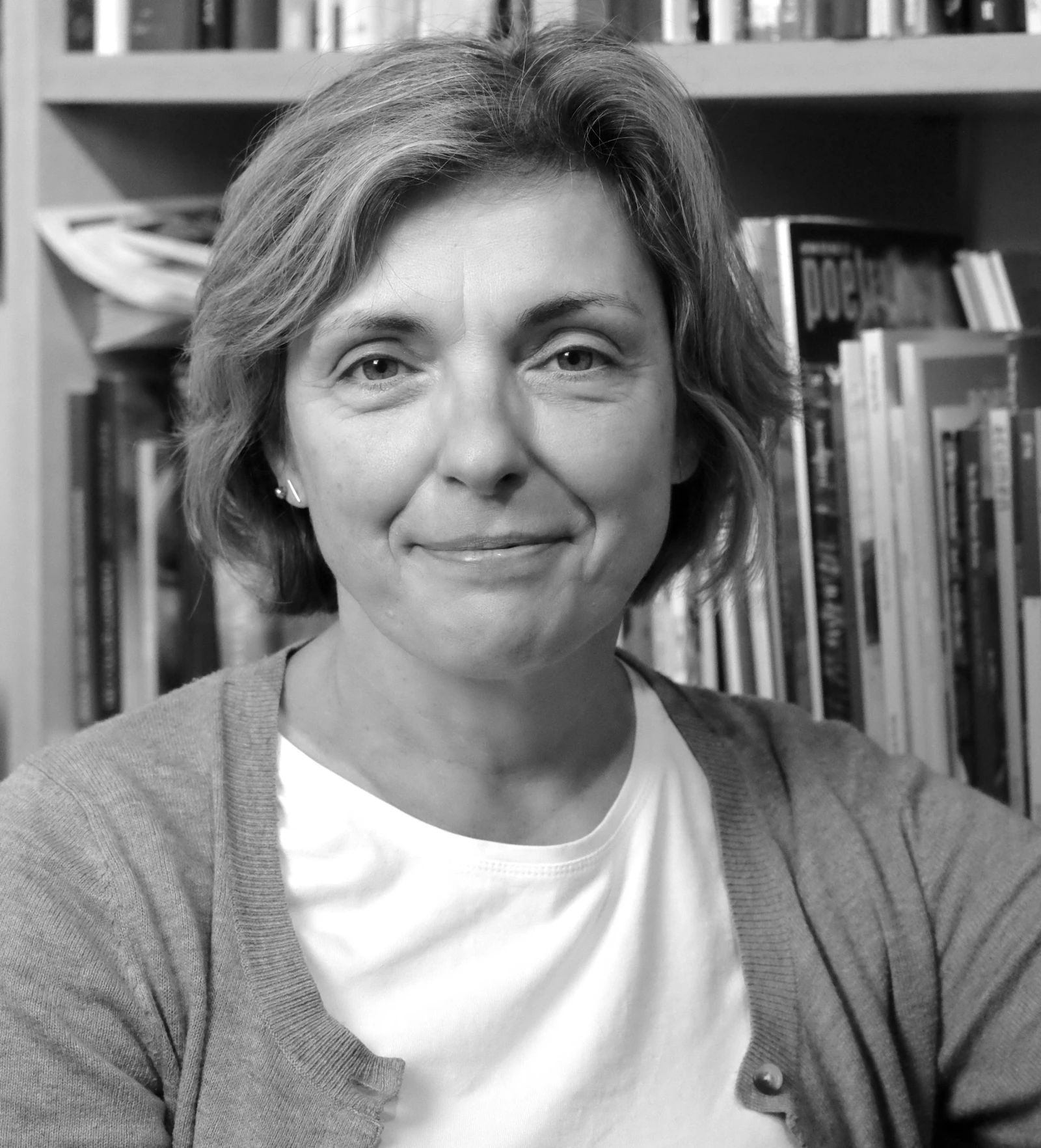
Susanna Galbraith is from Belfast. She is an editor of Abridged and her poetry has featured in numerous journals, magazines and anthologies in the UK, Ireland and abroad. She won the Red Line Poetry Competition 2021. @susannaalice

Susanna Galbraith (she/her) is from Belfast. She is a Poetry Ireland Introductions 2023 selectee. Her recent poems have appeared in New England Review, Berlin Lit, Propel Magazine and others. Her first pamphlet is forthcoming with Nine Pens Press, 2024. She is also an editor of Abridged
Follow her on Twitter @susannaalice
More work by Susanna Galbraith


Tel: 028 7126 6946
Email: hueditor@theverbal.co
Verbal, Stable Lane and Mall Wall, Bishop Street Within, Derry/Londonderry, BT48 6PU
 company
Copyright © 2026 Honest Ulsterman