

An interview
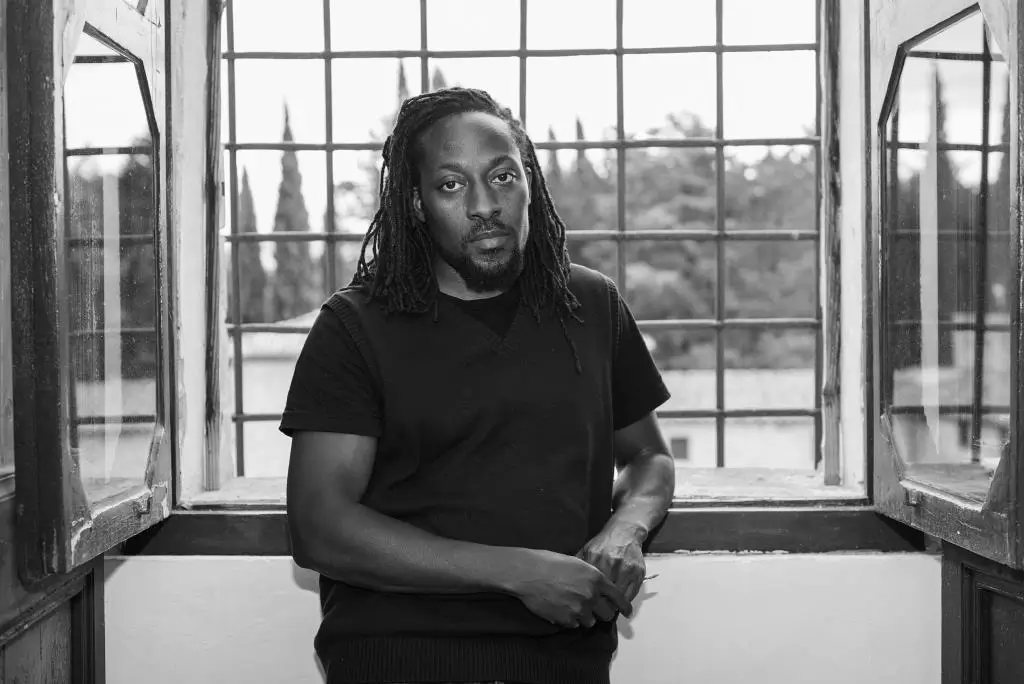
Winner of multiple international awards including Ghana’s ACRAG award and France's Prix Laure Bataillon, Nii Ayikwei Parkes is the author of Tail of the Blue Bird (novel), and The Makings of You (poetry) as well as two children's books under the pen name K.P. Kojo. Following roles at the University of Southampton, California State University and the University of Aberystwyth, he became the founding director of the Aidoo Centre for Creative Writing in Accra. Nii Ayikwei has been the senior editor at flipped eye publishing since 2001 and is currently Producer of Literature and Talks at Brighton Festival.
Gregory McCartney: Hi Nii, Thanks for being in the Honest Ulsterman. Could you tell me a bit about your background?
Nii Ayikwei Parkes: I'm the second scientist son of two scientists who owned a lot of books. I loved reading as a boy but never studied literature although I first worked as an editor on my school magazine in Ghana when I was 14.
GMCC: I really loved Filigree, can you tell me how it came about and why you decided it would be a good thing to edit?
NAP: I was asked by Peepal Tree if I would consider editing a new anthology of Black British poetry and I jumped at the chance. Peepal Tree publish my own poetry and I admire the work that they have done and continue to do in the global publishing space, but I also LOVE discovering new work, new approaches, new writers – and being one of the people asking the questions that can sometimes help a writer find their clearest expression.
GMCC: You mentioned in your introduction that your intention with Filigree was to find ‘work that pretends to be frill but is ballast’. Could you elaborate on that a bit?
NAP: I have always loved writing that works on several levels – poems and books that haunt you long after you have finished reading them – and I suppose I wanted a little bit of that, but more than that, I think the existence of Black British people is a sort of like that; in certain spaces, for the sake of survival, we only show fractions of ourselves. When your ebullience in a public space can lead to being held in a choke hold by police that can result in death, you float like a butterfly but it doesn't mean you can't sting like a bee. I was also hoping for the poetic equivalent of Ghanaian court stools, which are beautiful pieces of art, but also simple seats, designed to carry weight – ballast if you will – frill carrying ballast.
GMCC: It was an open submission call I believe so you have in a sense to work with what you get in. Are you happy enough that it’s representative of current British Black poetry writing? It was nice for me as well as to discover some great unfamiliar (to me) poets also to see Nick Makoha and Rachel Long who’ve been in The HU there.
NAP: I think we fool ourselves if we ever think a body of work fully represents a period or a people; there are writers out there who will hear of filigree when the book is being launched. However, I believe that the anthology gives us a sense of the range of possibilities in Black British poetry. It brims with a kind of urgency that can only be good for the future.
GMCC: And following on with maybe an obvious question: is British poetry still essentially middle-class, male and white?
NAP: Yes. And I think that will only change when there is a conscious effort to re-examine the reading and teaching of poetry. There are many editors out there who in their heart of hearts believe they are being entirely objective in publishing the best poetry they receive. However there is an element of reading poetry that is learned – we learn to read in certain ways, we learn how Larkin expresses and idea, we learn how Wilfred Owen practises restraint, we learn how Shelley manipulates an image and we come to, or are taught to, admire these things as markers of good poetry. The result is that even if you have a woman editor who has been raised in the same way she will privilege these qualities and perpetuate the white, male, middle-class canon with new faces. Indeed sometimes you will find clones of these aesthetic markers in poets who are women and poets of colour. When I was on the board of the Poetry Book Society, I tried to explain that was one of the reasons we kept having pretty much the same winners of awards – we knew how to read them; it's way easier for us to 'get' an Andrew Motion poem, than a poem by someone with different influences, because to some degree we've been trained to read Motion. That's why often it's people that haven't studied literature or people who still hold dear a certain 'other' heritage who are able to shake the foundations. I think that's why the US is so far ahead of us in breaking out of the cult of reverence to the same old, same old poetry.
GMCC: There is as in many anthologies quite a wonderful range of subject matter. Is there still however an expectation that black poets should be political even by those who would consider themselves quite liberal? In the Irish context it would be expecting every Irish poet to write explicitly about the Troubles I suppose.
NAP: Perhaps that expectation exists amongst the people I like to call 'sightseeing readers'; people who want to read Black or Irish poets to confirm their sense of the stereotype template of struggles 'those people' have. There are poets who are Black and Irish, there are poets who are home-schooled and those that went to inner city schools – all these things are part of a range of a limitless thread of nuance that can only escape you if you are obsessed with ticking boxes. Poems in Filigree about people quietly falling in love, secretly experiencing stirrings of lust, for me are as political as Joshua Idehen's poem on Grenfell – which is actually more about class than race.
GMCC: There are of course numerous nods to the societal tragedy of colonialism and racism as well as its effect on the contemporary self, throughout Filigree and to me there is a sense of loss running through the book. Often literally in the case of Rachel Long’s missing letters, Pete Kalu’s scored out words and Akila Richards smashed up/crumpled together sentences. Would you say there were any particular themes that emerged as you put Filigree together?
NAP: I ordered the poems in Filigree not according to names as many larger anthologies tend to do, but according to my perceived resonance of the poems – I think the fact that I didn't have to separate it into sections is a wonderful testament to the idea of the interconnectedness of life. As for loss, I believe the act of writing a poem is an act of loss – we're learning something in the writing and thus losing a kind of innocence, we're also losing the anonymity of our thoughts and losing elements of the feelings underlying the thoughts to the limits of vocabulary. So, yes, there's a whole lot of beautiful loss.
GMCC: In Dorothy Wang’s essay accompanying the anthology there is an interesting part suggesting that the ‘voice’ and concept of ‘universality’ that often accompanies discussion of poetry essentially mean the canonical white male filled with colonialist attitudes and assumptions. Would you agree and is it something that is easy to challenge?
NAP: I think I sort of answered that question in the white, male, middle-class question, but, yes, I essentially agree with Dorothy, who is a wonderfully thorough academic that genuinely loves poetry.
GMCC: I’m always fascinated by the process of editing itself. You’ve edited both magazines and books. Do you think that being an editor has changed much in recent times?
NAP: My own process hasn't changed. My career as an editor is rooted in humility; if I don't understand something I ask until I can see things the way the author intended, but ultimately if it doesn't have integrity is doesn't pass. I love the process of helping an author realise a vision. I know there are editors who work the way I do, but I am told there are not many. In my experience as a writer I would say the responses I get for work that I submit tells me that the role of an editor within mainstream publishing has changed; there appears to be more of a focus on a finished product, on a market profile, editors may say things like “I don't like the way anger is expressed in this story”, but rather than enter into a dialogue with the writer to resolve it, they will reject an entire manuscript so you have less of the long-standing editor/writer relationships that characterised the 60s, 70s ans 80s that also brought us a greater clutch of unique, iconic writers. But I guess writers are more likely to move publishers for money so the changes in editorial stance may be in response – life is dynamic like that. Agents have become more important. I feel like magazine editors are perhaps 'purer' editors now than book editors – their allegiance to the quality and heritage of the magazine empowers them to be less concerned with market fads.
GMCC: Perhaps because of the overwhelming amount of information available online editors are regularly being called curators. Would you see yourself as curating so to speak when you put together a book?
NAP: I think editors have always been curators; it's embedded in the role. When you edit books, the authors you bring together under an imprint is an act of curation; when you help put a book of poems or short stories together, the order in which the work appears, which is often part of the work the editor does, is an act of curation – even if you are not making changes to the text, you are curating. So, yes, I see myself as curating, but I don't need to be called a curator.
GMCC: And talking of the internet. We’ve seen the recent rise of what (rather dismissively) have been called ‘Youtube’ poets who have divided opinion recently with their motives and talent being questioned? Considering they have often massive (and young) audiences I always thought this was slightly snobbish and very sweeping. What would be your opinion of them?
NAP: Whenever a new medium emerges for the expression of an artform, the snobs come out. What I will say is, it's very easy to isolate the worst exponents of a movement and dismiss the entire movement – especially if there is no editorial intervention between creation and release – but you can't stop the movement. In all movements there are true artists and in the end they will transcend. There are good and terrible 'traditional' poets and there are good and terrible YouTube poets – and at least they are not hiding their faces!
GMCC: Sometimes after reading lots of work from contributors during the day I find it difficult to adjust to actually writing something myself. Has editing and regularly reading other people’s poetry had an influence on your own?
NAP: I'm a lot more critical of my own work as I write it sometimes, but that's only a hindrance when I'm in bad mood. I have found that I hear my line endings as I'm writing and that is a really beautiful free benefit of editing, speaking to so many people about the music of their work. The only downside is I don't spend as much time going over my work to review and fine tune so I end up not submitting much. I was literally summoned by Kwame Dawes to put together my first collection, The Makings of You, and I am grateful to him for that.
GMCC: You’re completely immersed in the creative writing scene as well as in schools and colleges. Do you think this very hands-on approach is an important part of your practice?
NAP: For me it's important, because speaking about writing critically also triggers creative thought. Also it keeps me connected to the world and its fluxes in a far more expansive way than I would be if I just live in my own head.
GMCC: Was The Parade, a series of tales from Ghana for children based on Ananse, the Trickster God perhaps partially inspired by this interaction with children and young people?
NAP: Yes, but it's from a far earlier interaction. I used to work in my mum's nursery on holidays when I was younger so telling tales to kids was always a side hustle. I felt a greater compulsion to actually publish for kids after my first child was born in 2008. I'm exploring YA now to keep up!
GMCC: Who would be the poets that you would suggest that the HU readers investigate further?
NAP: Definitely the poets in filigree – there is such a wealth of talent in there; but also Miriam Nash, Bridget Minamore, Laurie Ogden, Amy Acre, Elizabeth Acevedo, Jeremiah Brown, Sarah Westcott, Niall O'Sullivan, Bella Cox, Charlotte Ansell, Mahogany Browne... I could go on forever. Look outside the margins and you'll find a bounty.
GMCC: And finally the inevitable ‘What’s next?’ question. So: What’s next for you?
NAP: Crowdfunding my collection of stories, The City Will Love You, on Unbound and finishing the putting together of a new collection of poems.
GMCC: Thanks again Nii for being in the HU!
You can buy 'Filigree' here: https://www.peepaltreepress.com/books/filigree-contemporary-black-british-poetry
And you can help with Nii's new book here: https://unbound.com/books/the-city-will-love-you/
Photograph by Giorgia Fanelli.

Dr. Gregory McCartney is the editor of Abridged, the HU and an independent curator.
More work by Greg McCartney


Tel: 028 7126 6946
Email: hueditor@theverbal.co
Verbal, Stable Lane and Mall Wall, Bishop Street Within, Derry/Londonderry, BT48 6PU
 company
Copyright © 2026 Honest Ulsterman